
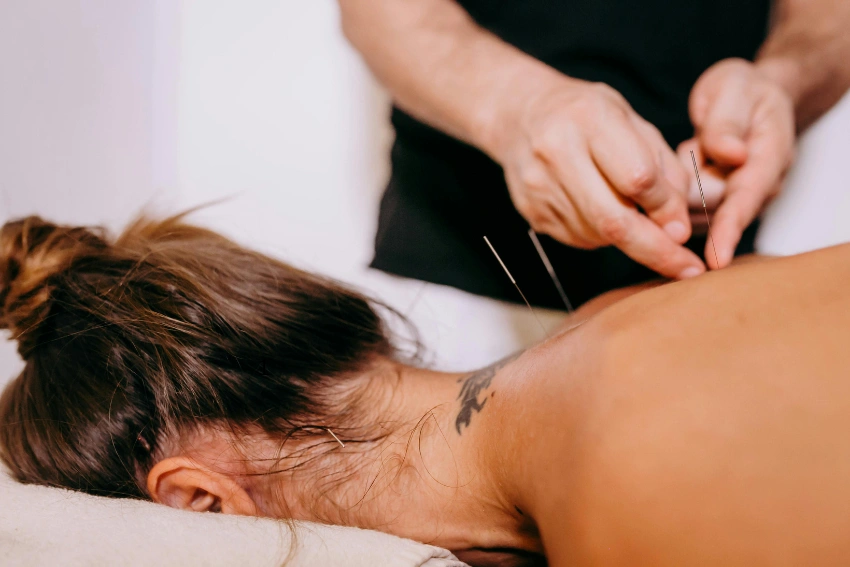
Dry Needling: The Secret Weapon for Relieving Pain and Boosting Recovery
Table of Contents
Ever had a knot in your back so stubborn it feels like a tiny rock lodged under your skin? Or maybe you’ve dealt with nagging shoulder pain that just won’t quit, no matter how many stretches you try? If so, dry needling might be the game-changer you’ve been looking for.
At Attwood Physiotherapy, our expert physiotherapists use this cutting-edge technique to help people just like you break free from muscle pain, stiffness, and movement restrictions. But what exactly is it, and how does it work? Let’s dive in—no medical jargon, just straight-up helpful info.
What is Dry Needling? How it Works for Tight Muscles
Imagine your muscle is a tangled-up rope. No matter how much you try to loosen it, the knot just won’t budge. That’s where dry needling comes in. Using a super-thin, sterile needle (yes, like acupuncture, but totally science-based), your physio targets those angry, knotted-up spots (aka “trigger points”) to help them finally relax.
How Dry Needling Provides Pain Relief and Restores Movement
When muscles get overworked, injured, or just cranky from poor posture, they can form tight, irritable bands that:
- Cut off blood flow (so healing slows down)
- Pinch nerves (hello, shooting pain!)
- Limit movement (making simple things like turning your head or lifting your arm feel like a chore)
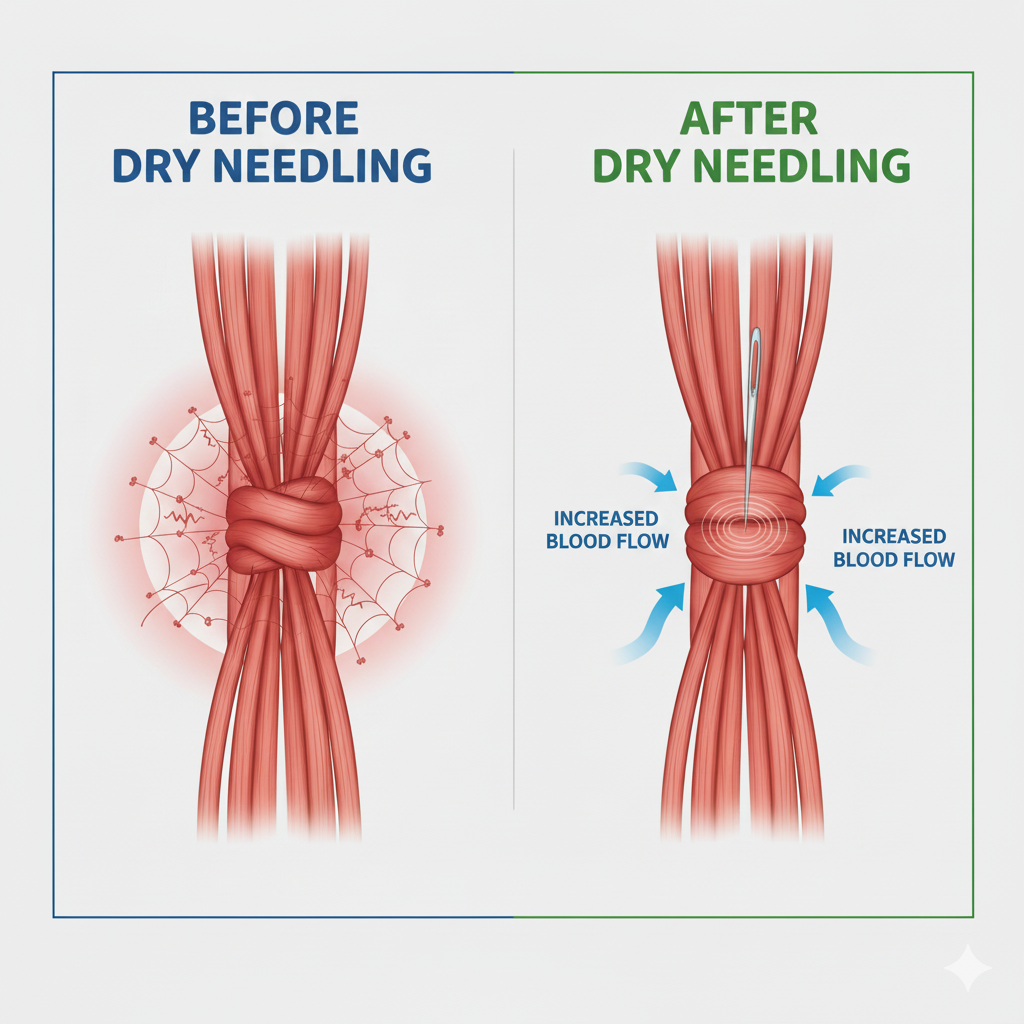
How it works:
- Triggering a tiny muscle twitch (which sounds weird but actually helps release tension)
- Increasing blood flow (so oxygen and nutrients rush in to heal the area)
- Shutting down pain signals (your brain gets the memo to stop freaking out)
- Restoring normal movement (so you can finally bend, twist, and stretch without wincing)
Who Can Benefit from Dry Needling?
Research shows that this treatment works wonders for:
- Chronic pain – Lower back, neck, shoulders—you name it.
- Sports injuries – Muscle strains, tendonitis, and even that old ankle sprain that never fully healed.
- Headaches & migraines – Often linked to tight muscles in the neck and shoulders.
- Desk-job stiffness – From hunching over a laptop all day.
- Postural imbalances – When one stubborn muscle throws everything else off.
- Back pain – A proven, effective method for releasing stubborn back knots and tension.
Why You Should Only Trust a Professional
- Know exactly where to place the needle (miss by a few millimeters, and you could hit a nerve or blood vessel—yikes!).
- Assess the real cause of your pain (not all muscle knots are created equal).
- Pair it with the right rehab plan (because dry needling works best alongside exercises and hands-on therapy).
At Attwood Physiotherapy, our physios are highly trained in dry needling—so you get safe, effective, and personalized care, not a guessing game.
What to Expect During a Session
- First, we chat. Your physio will ask about your pain, movement struggles, and goals.
- Then, we assess. They’ll check your posture, flexibility, and pinpoint problem areas.
- Needle time! You might feel a quick pinch (like a flick), then a deep ache or twitch as the muscle releases.
- Aftercare. Some mild soreness (like post-workout stiffness) is normal, but most people feel relief within a day or two.
Final Thoughts: Is Dry Needling Right for You?
If you’ve tried massage, stretching, heat packs, and still can’t shake that stubborn pain, dry needling could be your missing puzzle piece. It’s fast, effective, and backed by science—but only when done by a trained professional.
What is a biomechanical assessment?
A biomechanical assessment is a comprehensive evaluation performed by a trained physiotherapist to identify subtle imbalances and root causes of your pain, providing a foundation for a personalized treatment plan.
💡 Curious? Let’s talk! Book a session at Attwood Physiotherapy and see if dry needling can help you move freely again.
References:
